The annual meeting between RCPI Institute of Obstetricians & Gynaecologists and the Junior Obstetrics and Gynaecology Society took play at No 6 Kildare Street on 28 November.
The Junior Obstetrics and Gynaecology Society (JOGS) has been representing trainees in Ireland since 1988.
After the meeting was declared open by society chair Dr Oladayo Oduola, JOGS presentations began with Dr Ita Shanahan (post-CSCST specialist, National Maternity Hospital), who presented a research project discovering a low rate of serious complications in a cohort of patients with transabdominal cerclage – a surgical stitch to prevent preterm birth. Dr Jill Mitchell (HST Obstetrics & Gynaecology trainee) shared positive results of microneedle electrode being used for fetal monitoring at University College Cork, suggesting the technology has potential to reduce unnecessary interventions
Evidence that the probiotic Bifidobacterium reduces risk of gestational diabetes was presented by Dr Gillian Corbett (HST Obstetrics & Gynaecology trainee, Our Lady of Lourdes Hospital Drogheda). Dr Valerie Nicolay (HST Obstetrics & Gynaecology trainee) shared results of a study exploring possible links between sleep and pre-term delivery, which found no strong evidence between the two. Administration of ferric carboxymaltose was found to be more effective treatment for anaemic patients compared to another iron replacement iron sucrose, in a project by Dr Mishal Maqbool (International Medical Graduate Training Initiative, Cavan General Hospital) conducted at Polyclinic Hospital Islamabad, Pakistan.
Dr Icchya Gyawali (HST Obstetrics & Gynaecology trainee, Galway University Hospital) presented research finding induction of labour in a cohort of patients with class III obesity increased the likelihood of emergency caesarean. A study comparing patients exposed to vaping and smoking with patients who don’t vape or smoke, conducted by Mr Gohit Tankala (UCD Bachelor of Medicine, Surgery, and Obstetrics student), found that while smoking is linked with reduced femur length and fetal weight, vaping does not mimic the harmful effects of smoking on fetal growth. Dr Ashraf Dwidar (registrar, Letterkenny University Hospital) spoke of using artificial intelligence to create apps that interpret the Irish National Clinical Guidelines on Obstetrics and Gynaecology into guides to ectopic pregnancy and postpartum haemorrhage.
The second session of the day began with Dr Abeer Fatima (senior house officer – obstetrics & gynaecology, St Luke’s General Hospital Kilkenny) presenting on a quality improvement project to educate patients on contamination of midstream urine samples. A review of time taken to manually remove placenta was presented by Dr Orla Power (BST Obstetrics & Gynaecology trainee, Cork University Maternity Hospital). Dr Bláithín Downey presented on a case of Mirror Syndrome associated with Diandric Triploidy and Partial Molar Pregnancy. A study of women over the age of 60 invited for HPV screening test was presented by Dr Sahr Yambasu (HST Obstetrics & Gynaecology trainee, The Coombe Hospital).
Dr Sarah Petch (HST Obstetrics & Gynaecology trainee, Rotunda Hospital) presented on a sibling oocyte trial. Reproductive health implications of energy deficiency in elite female GAA players were the focus of research by Dr Adrianne Wyse (HST Endocrinology & Diabetes Mellitus trainee, Tallaght University Hospital). Dr Shahad Al-Tikriti (registrar, The Coombe Hospital) shared clinician perspectives moving between clinical practice and research roles. A review of the use of artificial intelligence in urogynaecological diagnostics was given by Dr Charles Leahy (HST Obstetrics & Gynaecology trainee).
The final JOGS presentations began with Dr Mary Barrett (post-CSCST specialist, Cork University Maternity Hospital), who shared a study of Non-consultant Hospital Doctors’ knowledge of cervical screening. Rates of obstetric anal sphincter injury were looked at by Dr Jayavani Penchala (BST Obstetrics & Gynaecology trainee, Rotunda Hospital). Dr Eibhlin Healy (registrar, The Coombe Hospital) presented on childhood health outcomes from E-cigarettes during pregnancy.
In the afternoon, two invited keynote speakers gave presentations. Dr Anna Aabakke (obstetrician, Holbæk Hospital Denmark) spoke about outpatient induction of labour – starting labour at home before presenting to hospital after a set period – the rate of which is growing internationally. Dr Aabakke found that outpatient induction of labour seems safe and effective in low-risk pregnancy.
The coroner for Galway City and West Galway, Mr Ciaran MacLoughlin, gave a presentation about what obstetricians should know regarding the role of the coroner’s court. Mr MacLoughlin explained that coroners have statutory authority to request a postmortem examination by a consultant pathologist. “The coroner doesn’t get involved with your specialty too much, and long may that continue,” he said.
Towards the end of the meeting, RCPI Institute of Obstetricians & Gynaecologists chair Dr Suzanne O’Sullivan paid tribute to obstetrician-gynaecologist Prof John Murphy – who died in August 2025. Prof Murphy was president of RCPI between 2006-2007. He will be remembered with the annual awarding of the John Murphy medal to a trainee whose work through audit or research enhances quality and safety for women and babies – themes that epitomise his legacy.
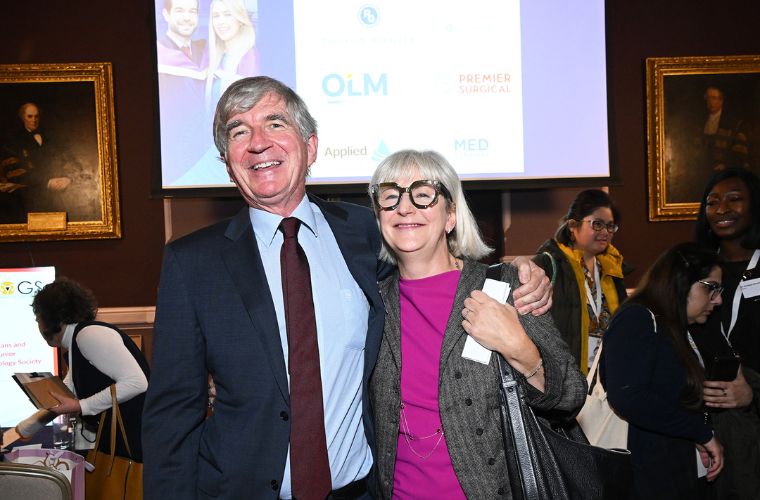
One of the last orders of business was the presentation of the Sean Boyle Award – an award presented to a college fellow who has made a considerable contribution to the institute and the development of the specialty at a national level, honouring the work of Dr Sean Boyle. The award was presented to Prof Paul Byrne (obstetrician-gynaecologist, Beaumont Hospital and Rotunda Hospital).
Prof Byrne was acknowledged for his “quietly transformative, broad, sustained and enduring commitment” to transforming Obstetrics and Gynaecology – including his teaching of surgical gynaecology (colposcopy training, in particular) and his contribution to transforming the Membership of RCPI (O&G) Part II: Written examination. As per tradition, the medal-winner gave a presentation illuminating lives of obstetrician-gynaecologists outside their specialty. Lights dimmed in the historic Corrigan room for a presentation of Prof Byrne’s landscape photography, switching between impressively minimalist, calming snowscapes from trips to Japan and Italy.
“You are very dedicated to obstetrics and gynaecology,” said Prof Byrne. “What I’d say is find another passion in your lives as well.”
SEAN BOYLE AWARD
Presented to a fellow who has made a considerable contribution to the Institute and the development of the specialty at a national level, over their working life, in the domains of education, administration, training and examining as determined by the Chair and Board. Honouring the work of Dr Sean Boyle
Recipient: Prof Paul Byrne
Supervisor of one of the first academic intern tracks at Beaumont Hospital, Prof Byrne was responsible for colposcopy training for a number of trainees who are now consultants in the Irish and international health service. His lasting contribution to the Membership of RCPI (O&G) committee included changes to the Part II: Written examination. His experience as an examiner, both in Ireland and in international centres, has significantly enhanced delivery of Membership of RCPI (Obstetrics & Gynaecology). He is also an award-winning landscape photographer.
JUNIOR OBSTETRICS & GYNAECOLOGY PRIZES
Best Oral Presentation:
Dr Gillian Corbett:
Gut Microbial gene function and gestational diabetes is altered with bifidobacterium breve 702258: a randomised trial
Best Medical Student Presentation:
Mr Gohit Tankala
Comparative effects of vaping, smoking, and dual exposures on third trimester fetal biometry; a subgroup analysis of the echo study
Clinch Medal for Best Senior House Officer Presentation. Honouring the memory of obstetrician-gynaecologist Dr James Clinch, former Master of The Coombe Hospital and chair of RCPI Institute of Obstetricians & Gynaecologists.
Dr Abeer Fatima
Reducing contamination of midstream urine (MSU) sample using visual aid to educate patients: a quality improvement project
Turner Medal for Clinically Impactful Research. Named after obstetrician-gynaecologist Prof Michael Turner, former Master of The Coombe Hospital and director of UCD Centre for Human Reproduction:
Dr Jill Mitchell
Development and characterisation of a microneedle pH sensor for intrapartum fetal monitoring
Best Poster Presentation:
Anthony Sheppard
Post-early medical abortion complications in secondary care: a retrospective four-year review of one tertiary unit's experience
Find out more about RCPI INSTITUTE OF OBSTETRICIANS & GYNAECOLOGISTS